Cold weather exposes the difference between a heat pump’s advertised operating limit and the heat it can actually deliver to your building. By the end, you will know how EVI increases low-temperature capacity, which performance figures to request, and whether its added complexity suits your property, emitters and electrical supply.
Key takeaways
- Check capacity and efficiency at your actual outdoor design temperature.
- Confirm the compressor, economizer, controls and emitters are cold-climate compatible.
- Compare EVI with backup heating, not only its rated efficiency.
- Require commissioning records, refrigerant data and operating limits before handover.
How Enhanced Vapour Injection changes cold-weather compressor performance
At low outdoor temperatures, Enhanced Vapour Injection changes where refrigerant enters the compressor. A branch leaves an economizer, such as a flash tank or an economizer heat exchanger, expands to an intermediate pressure, and enters an intermediate-pressure injection port in a compatible scroll compressor. The added vapour increases refrigerant mass flow through the compression process.
That extra mass flow helps an EVI compressor preserve low-temperature heating capacity as outdoor conditions drive the pressure ratio higher. The injected vapour also cools the compression process, which can lower compressor discharge temperature and help keep the compressor within its permitted limit.
EVI does not make a heat pump independent of outdoor temperature, and it does not guarantee a high COP at every operating point.
EVI compressor | Standard air-source heat pump compressor Low-temperature operation | Adds refrigerant mass flow and can retain more heating capacity | Capacity usually falls faster as outdoor temperature drops Compression temperature | Intermediate-pressure injection can reduce discharge temperature | High pressure ratios can push discharge temperature toward its limit System trade-off | Requires an injection control valve, second expansion device, sensors and injection-port controls | Uses a simpler circuit with fewer control points
Do not confuse the operating ambient temperature with the minimum guaranteed operating temperature, rated capacity temperature, or lowest temperature that still produces useful heat. Supplying high-temperature radiator water also raises compression work, so preserved capacity does not mean efficient operation.
An EVI system adds commissioning risks: incorrect charge, poor oil return or unstable injection control can reduce output or damage the compressor.
How to read EVI temperature limits, capacity tables and efficiency claims
A claim that a unit “works down to -25°C” proves useful heating only when it reports useful heat output, COP, delivered kilowatts, backup-heat requirements and test conditions at that temperature. Continued operation alone can mean the controls permit running before a protection limit stops the compressor.
1. Find the operating ambient temperature range and separate it from the minimum guaranteed operating temperature. The latter is the manufacturer’s stated boundary, not proof that the unit meets your building’s heat demand.
2. Locate the rated capacity temperature, often 7°C, and compare capacity retention at 2°C, -7°C, -15°C, -25°C and -30°C. A table showing 10 kW at 7°C but 5 kW at -25°C tells you how much backup heat the design needs.
3. Check COP at each point and record whether the test produces 35°C, 45°C or 60°C hot water. EVI can preserve capacity at low ambient temperature, but high water temperature raises compression work and lowers COP.
4. Confirm the test framework. AHRI 210/240 gives a recognised rating basis for unitary air-source heat pumps, but request low-temperature capacity and COP data beyond the headline seasonal rating.
| Temperature point | What to verify | Warning sign |
|---|---|---|
| 7°C | Rated capacity temperature and COP | Nominal capacity presented as cold-weather performance |
| -15°C or -25°C | Delivered kilowatts, COP and capacity retention | “Operates” with no output |
| -30°C | Guaranteed output and backup requirement | Control boundary described as heating capacity |
Finally, ask for refrigerant safety classification, charge size, pressure limits and leak detection details. These establish safe operation; they do not demonstrate heating performance.
What a cold-climate EVI installation must be designed to handle
An EVI installation works reliably in cold weather only when its capacity matches the building heat-loss calculation at the local design outdoor temperature. Insulation reduces that load; incorrect emitter sizing increases required flow temperature and erodes efficiency.
| Factor | Design check | Failure if missed |
|---|---|---|
| Building | Size radiators, underfloor heating or fan coils for the calculated load and target flow temperature | High-temperature radiators force greater compressor work |
| Hydraulic | Match pumps, valves and controls; add a buffer tank where minimum flow or cycling requires it; size the domestic-hot-water cylinder and backup heater | Low flow, short cycling or inadequate hot water |
| Electrical | Check voltage protection, wiring and peak electrical demand, including the backup heater and defrost | Trips, voltage faults or unavailable reserve heat |
| Outdoor site | Allow outdoor-unit clearance for wind, snow and ice; prevent blocked airflow and provide condensate drainage | Falling capacity, recirculated cold air or frozen discharge water |
A low-temperature emitter system gives the EVI unit its best chance of efficient operation. Underfloor heating usually needs lower flow temperature than radiators, while fan coils depend on adequate airflow and water temperature.
The controls must coordinate compressor output, pumps, valves, backup heater and defrost. Humidity determines how quickly ice forms on the coil; during defrost, heating output drops and meltwater must drain away rather than freeze beneath the unit. Oversizing also causes short cycling, while undersizing increases backup-heater use during peak cold.
When EVI is worth choosing over other heating systems
Choose EVI when the design heat loss, cold-spell duration and domestic-hot-water demand justify its extra controls and components. The cold-climate heating decision process must also account for running temperature: high-temperature radiators reduce efficiency, even when EVI preserves capacity.
| Option | Strength | Choose it when |
|---|---|---|
| EVI air-source | Better low-temperature capacity and high-water-temperature capability | Extreme cold, high hot-water demand or limited emitter upgrades make standard air-source heat pumps impractical |
| Standard air-source | Lower complexity, installation disruption and purchase cost | The building has good insulation, adequately sized emitters and moderate winter loads |
| Ground-source | Stable output and efficiency across weather changes | You have land or borehole access and accept higher installation disruption and lifecycle cost |
| Gas boiler | Fast response and compact backup | Gas is available, emissions targets are less important, or resilience during extreme cold is critical |
| Electric resistance | Simple, quiet and inexpensive to install | The load is small or a backup heater is needed; expect high electricity consumption |
| Hybrid | Heat-pump efficiency plus boiler resilience | Cold-spell duration, inadequate electrical service or peak-load cost makes one system risky |
Do not select EVI to compensate for poor insulation, undersized emitters, unsafe drainage or incorrect sizing. Those faults increase backup-heater consumption and erase the efficiency advantage. Check maintenance, servicing access, compressor replacement cost and emissions before comparing lifecycle cost.
Adreco Engineering Pvt Ltd can help compare an EVI design against a standard air-source option by testing the calculated heat loss, emitter temperatures and backup strategy rather than relying on peak capacity claims.
Related products
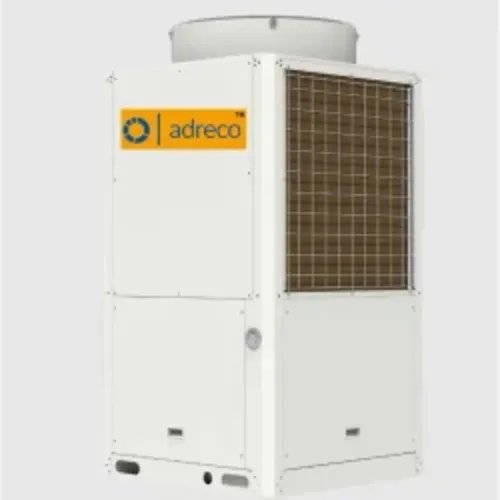
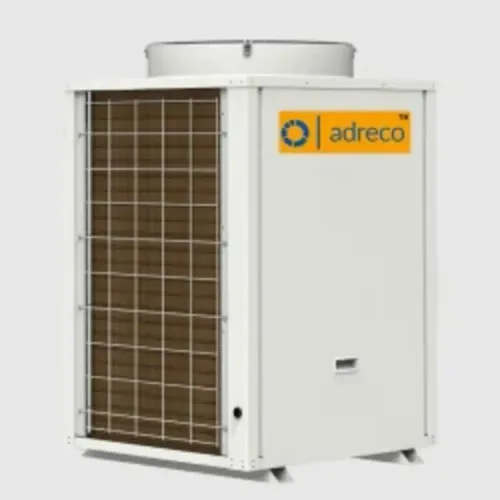
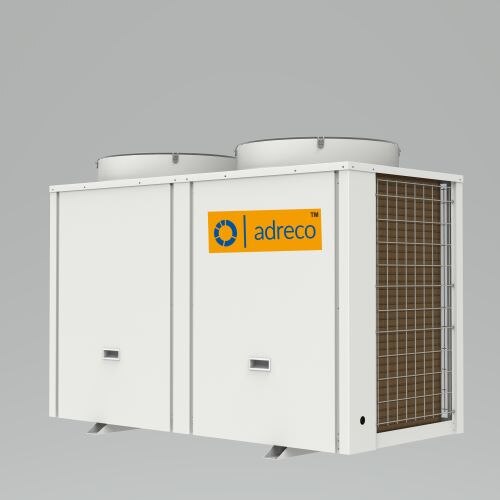 | EVI Heat Pump ₹195000 features: 1. Operating ambient temperature range up to -30° C to 43° C. 2. Hot water temperature upto 60° C. 3. View product → |
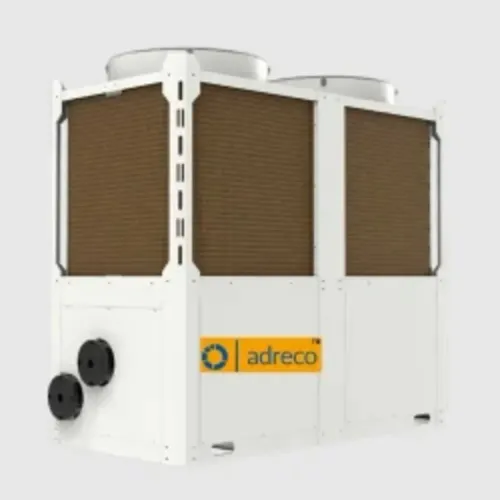
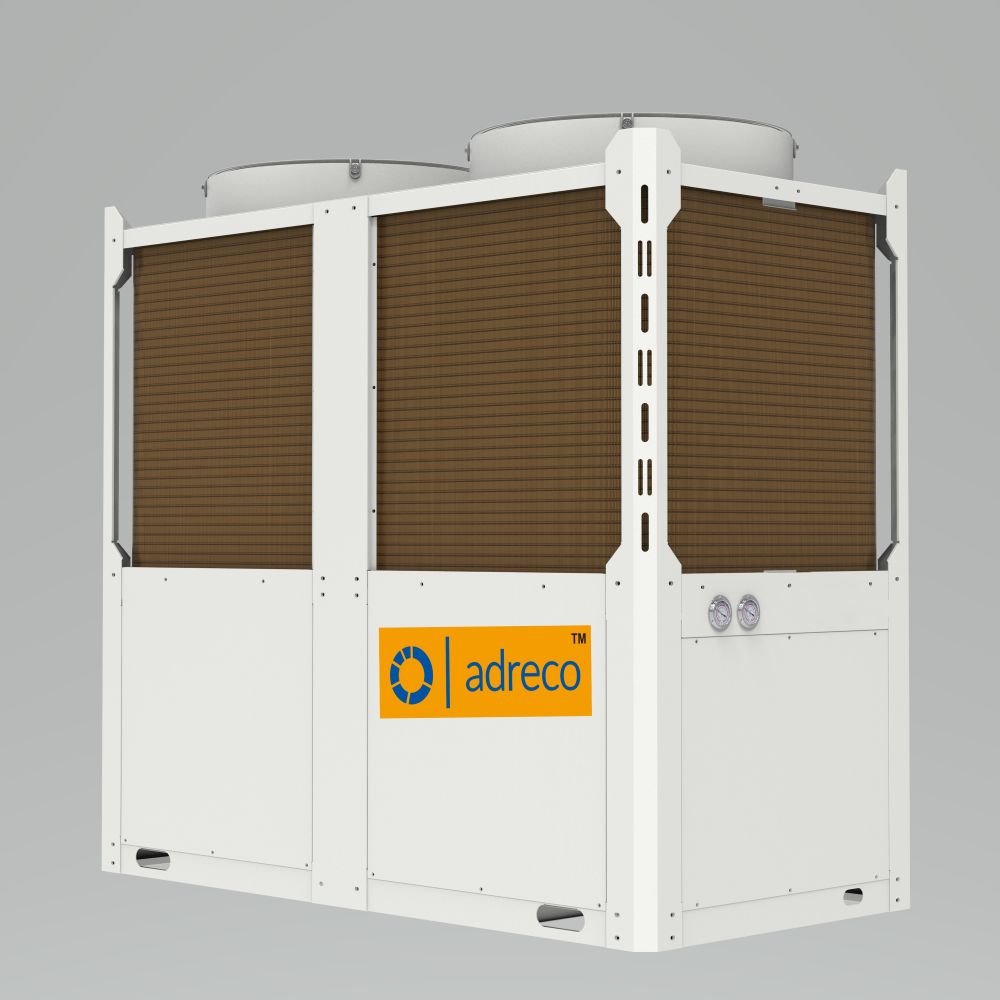 | Heat Pump Central Heating System Heat Pump Central Heating System ₹200000 Features: 1. Operating ambient temperature range up to -30° C to 43° C. 2. Hot water temperature upto 60° C. 3. View product → |
What to verify before purchase, commissioning and long-term operation
A supportable EVI purchase comes with traceable design data, named components and a documented commissioning process. Request capacity and COP tables showing auxiliary, fan, pump and defrost power; the sound power rating; wiring requirements; a hydraulic schematic; warranty terms; and local service coverage.
| Document | What to verify | Warning sign |
|---|---|---|
| Compressor | Copeland or Danfoss compressor model, refrigerant configuration and injection method | “EVI compressor” with no model or parts list |
| Design | Rated water temperatures, flow rates and protection settings | Capacity data without entering or leaving-water temperatures |
| Service | Installation commissioning sheet, fault codes and refrigerant-service access | No procedure for charging, recovery or injection-valve testing |
Before accepting the system, require these safeguards and records:
- Confirm restart after a power cut and alarms for compressor fault, sensor fault, refrigerant leak and operation below operating limit. Record measured voltage, water flow, temperatures, pressure readings and defrost behaviour during installation commissioning.
- Check that the installer explains the expansion devices, injection controller, sensors, condensate route and isolation points. A refrigerant-service access panel saves time and reduces unsafe dismantling.
- Schedule air filter cleaning, outdoor coil cleaning, airflow inspection and condensate checks. Keep the coil clear of snow and leaves; restricted airflow raises discharge pressure and cuts capacity.
- Verify the defrost sequence before winter, then book an annual controls check. Ask who diagnoses refrigerant leaks and compressor protection trips under the warranty, and keep every service record.
Frequently asked questions
How does Enhanced Vapour Injection improve compressor performance in cold weather?
EVI adds vapour at an intermediate pressure through a dedicated compressor injection port, increasing refrigerant mass flow during low-temperature operation.
Which figures matter in an EVI heat pump capacity table?
Check heating capacity, power input and efficiency at the outdoor temperatures and leaving-water or supply-air temperatures your system will actually use.
What must a cold-climate EVI installation handle?
The design must account for low outdoor temperatures, defrost cycles, water-flow requirements, condensate drainage, controls, emitters and any backup heat.
When is an EVI heat pump worth choosing over another heating system?
EVI is worth considering when low-temperature performance, adequate capacity and operating efficiency outweigh the installation complexity and cost of alternatives.
What should you verify before buying and commissioning an EVI heat pump?
Verify published test conditions, operating limits, compressor and refrigerant details, design capacity, installation requirements, controls and commissioning records.