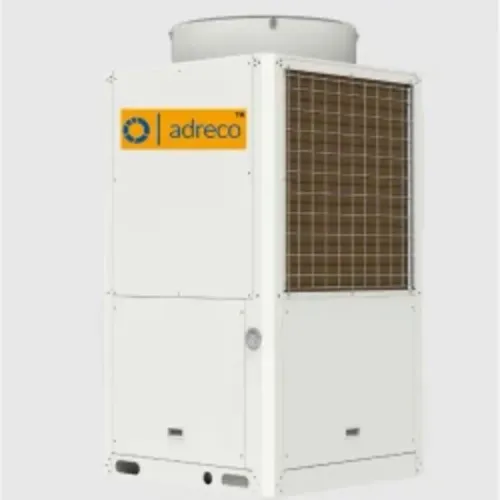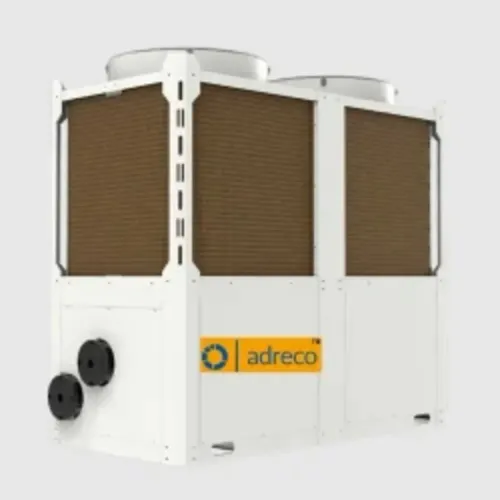
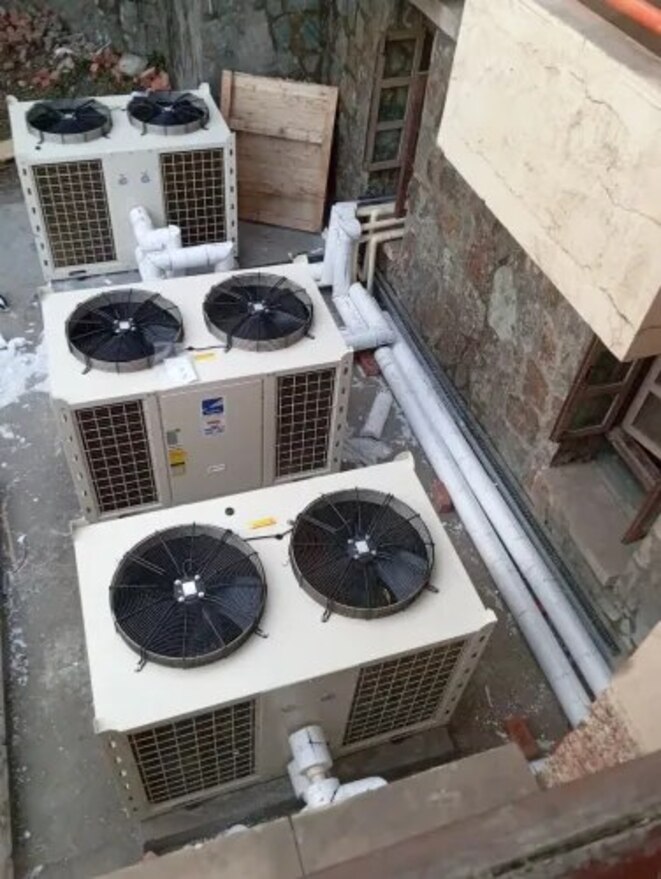
An air-source heat pump does not burn fuel to create heat: it moves thermal energy between outdoor air and a building through a controlled refrigeration circuit. By the end, you will be able to distinguish system types, compare performance figures, and identify the design details that determine whether heating, cooling, hot water, or pool operation works efficiently.
Key takeaways
- Use low-temperature emitters to improve heat-pump efficiency.
- Compare SCOP, not just peak COP, for seasonal performance.
- Check flow temperatures, insulation, controls, and electrical capacity before installation.
- Use separate temperature settings for heating, hot water, and pool circuits.
How the Refrigeration Circuit Moves Heat
An air-source heat pump extracts heat from outdoor air and delivers it indoors by circulating a refrigerant through a sealed refrigerant circuit. Even cold air contains thermal energy; the refrigerant absorbs it in the outdoor coil, then the compressor raises its pressure and temperature so that the heat can be released inside.
The circuit follows this sequence:
- Evaporator: Outdoor air passes across the evaporator coil, allowing the cold, low-pressure refrigerant to absorb heat and boil into a vapour.
- Compressor: The compressor raises the vapour’s pressure, which sharply increases its temperature and drives the refrigerant indoors.
- Condenser coil or heat exchanger: The hot refrigerant releases heat to room air or to water flowing through radiators, underfloor loops, or a hot-water cylinder.
- Expansion valve: The valve reduces refrigerant pressure and temperature before the cycle returns to the outdoor coil.
In reverse-cycle operation, a reversing valve changes the refrigerant flow direction. The indoor coil becomes the evaporator and absorbs heat from the building, while the outdoor coil becomes the condenser and rejects that heat outside.
This provides cooling, but a hydronic heating system does not become a complete cooling system by reversing the circuit: it needs suitable fan coils or other emitters, condensate drainage, and dew-point controls to prevent condensation.
Cold, damp weather can frost the outdoor coil. The unit then enters defrost mode, temporarily reversing operation and using energy; meltwater must drain safely rather than refreeze around the equipment.
What COP and SCOP Reveal About Real Efficiency
A coefficient of performance COP is the heat delivered divided by the electricity consumed at a particular operating point. A COP of 4 means 4 kWh of heat for 1 kWh of electricity, but it is not a whole-season promise.
| Measure | What it reveals | Limitation |
|---|---|---|
| COP | Instantaneous efficiency at a stated outdoor temperature and flow temperature | Does not include changing weather, part-load operation, or all defrost energy |
| SCOP | Seasonal coefficient of performance across defined temperature bins and operating conditions | Still depends on the test assumptions and system design |
EN 14511 reports rated capacity and efficiency at defined test points. EN 14825 assesses seasonal performance using specified outdoor-temperature bins. Compare published figures only when the flow temperature, outdoor condition, capacity, and standard match.
Interpret the figures through these checks:
- Outdoor temperature: Capacity and COP fall as air gets colder. Check performance at your local design outdoor temperature, not only at a mild test point.
- Flow temperature: Raising leaving-water temperature for high-temperature radiators makes the compressor work harder and reduces COP. Larger radiators or underfloor loops can improve results.
- Defrosting: Cold, damp weather creates coil frost. Defrost temporarily consumes electricity, interrupts heating, and produces meltwater that needs safe drainage.
- Part-load operation: An oversized unit can cycle frequently instead of modulating steadily, wasting energy and increasing wear. EN 14825 gives part-load results that a single COP cannot show.
- System sizing: Match capacity to the building heat loss at design temperature. Undersizing triggers backup heat; oversizing encourages cycling. Floor area alone is not a sizing method.
Choosing Emitters and Connecting the Building System
The emitter determines how efficiently the building uses heat. An air-to-water heat pump sends heated water through a manifold or header to underfloor heating, low-temperature radiators, or fan-coil units. A circulation pump moves the water, while motorised valves and room thermostats regulate each zone.
| System | Building connection | Main design point |
|---|---|---|
| Air-to-water heat pump | Flow and return pipes serve radiators, underfloor loops, fan coils, or a hot-water cylinder | Check emitter output at the intended leaving-water temperature |
| Air-to-air heat pump | Refrigerant serves indoor fan-coil units that blow conditioned air into rooms | Each indoor unit needs airflow, drainage, and room-level control |
| Reversible hydronic system | Chilled water serves fan coils or other moisture-safe emitters | Add condensate drainage and dew-point protection before cooling |
Existing radiators are not automatically unsuitable. A room-by-room heat-loss calculation and emitter-output check will show whether each radiator can meet demand at a lower flow temperature; undersized units need replacement or a higher-temperature operating point.
Use a buffer tank only when the hydraulic design needs extra water volume, separation between circuits, or minimum run time. Oversized tanks add heat loss and can reduce efficiency. Balance every circuit, set pump control correctly, and prevent valves from closing every path while the heat pump is running.
A thermostat can request heat from the heat-pump controller, while a building-management system can coordinate schedules, zone temperatures, alarms, pumps, valves, and setback periods. Reversing into cooling requires fan coils, condensate drainage, and controls that keep water surfaces above the room-air dew point.
Adapting Heat Pumps for Hot Water and Swimming Pools
Domestic hot water needs higher temperatures than space heating, so recovery uses more electricity and can reduce the heat pump’s COP. A domestic hot-water cylinder stores heated water, allowing the system to switch from space heating to a scheduled charging cycle rather than chase taps continuously.
Pool heating has a steadier, lower-temperature demand, but the water volume and exposed surface create a long running load. Evaporation is the main loss: a tight pool cover can save more energy than simply fitting a larger heat pump.
| Application | Main load | Essential equipment and controls |
|---|---|---|
| Domestic hot water | High-temperature recovery into stored water | Domestic hot-water cylinder, cylinder sizing, temperature sensor, diverter valve, immersion heater and hygiene control |
| Swimming pool | Continuous heat loss through water and surface | Pool heat exchanger, circulation pump, flow switch, water-temperature sensor, insulated pipework, cover and pool heat pump integration |
For hot water, size the cylinder for peak occupancy and draw-off rather than choosing the smallest vessel that fits. Programme charging during suitable periods, give hot-water priority when necessary, and use a mixing valve to deliver safe tap temperatures without storing the entire cylinder at a scalding level.
Hygiene control needs a scheduled high-temperature cycle, often using the immersion heater or heat pump’s backup mode to reach the manufacturer’s specified sanitation temperature. Without adequate sensing, the system can either waste electricity by reheating too often or leave stored water below the required safety range.
Pool controls should stop heating when the circulation pump is off, use a flow switch to protect the heat exchanger, and coordinate filtration, heating and cover operation. Pool heat pump integration also needs corrosion-resistant components and a bypass arrangement for commissioning and maintenance.
What to Check Before Selecting and Commissioning a System
A credible design begins with measured demand, not floor area. Ask for a building heat-loss calculation, room by room, using the local design outdoor temperature, then compare that load with the heat pump’s capacity at the same condition.
1. Confirm the selected capacity, flow temperature, and emitter output. Existing radiators are not automatically unsuitable: replace only those that cannot meet room demand at an efficient flow temperature. Check domestic-hot-water recovery, backup heat, electrical supply, and any required load management.
2. Check the installation route and system type. Monobloc and split systems have different risks: a monobloc carries water outdoors and needs manufacturer-approved freeze protection, while a split system carries refrigerant and requires qualified refrigerant installation. Verify condensate and defrost-water discharge before the unit is fixed.
3. Inspect the hydraulic design. Require stated pipe sizes, minimum system volume, pump control, zoning, and hydraulic balancing. A buffer tank is useful only when it provides needed hydraulic separation, volume, or anti-cycling control; an oversized tank adds heat loss, pumping energy, and cost.
4. At commissioning, record flow and return temperatures, flow rates, operating modes, defrost behaviour, safety limits, and backup-heater operation. The handover pack must include controller settings, wiring diagrams, maintenance intervals, fault codes, and the commissioning record.
A specialist such as Adreco Engineering Pvt Ltd can assess whether the proposed equipment, emitters, pipework, controls, and intended application work together before purchase and verify those items during commissioning.
Related products
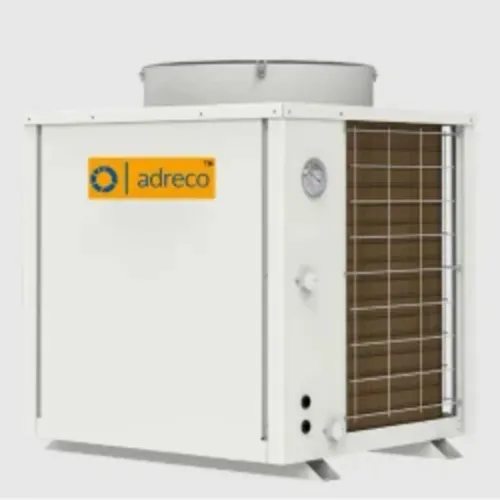
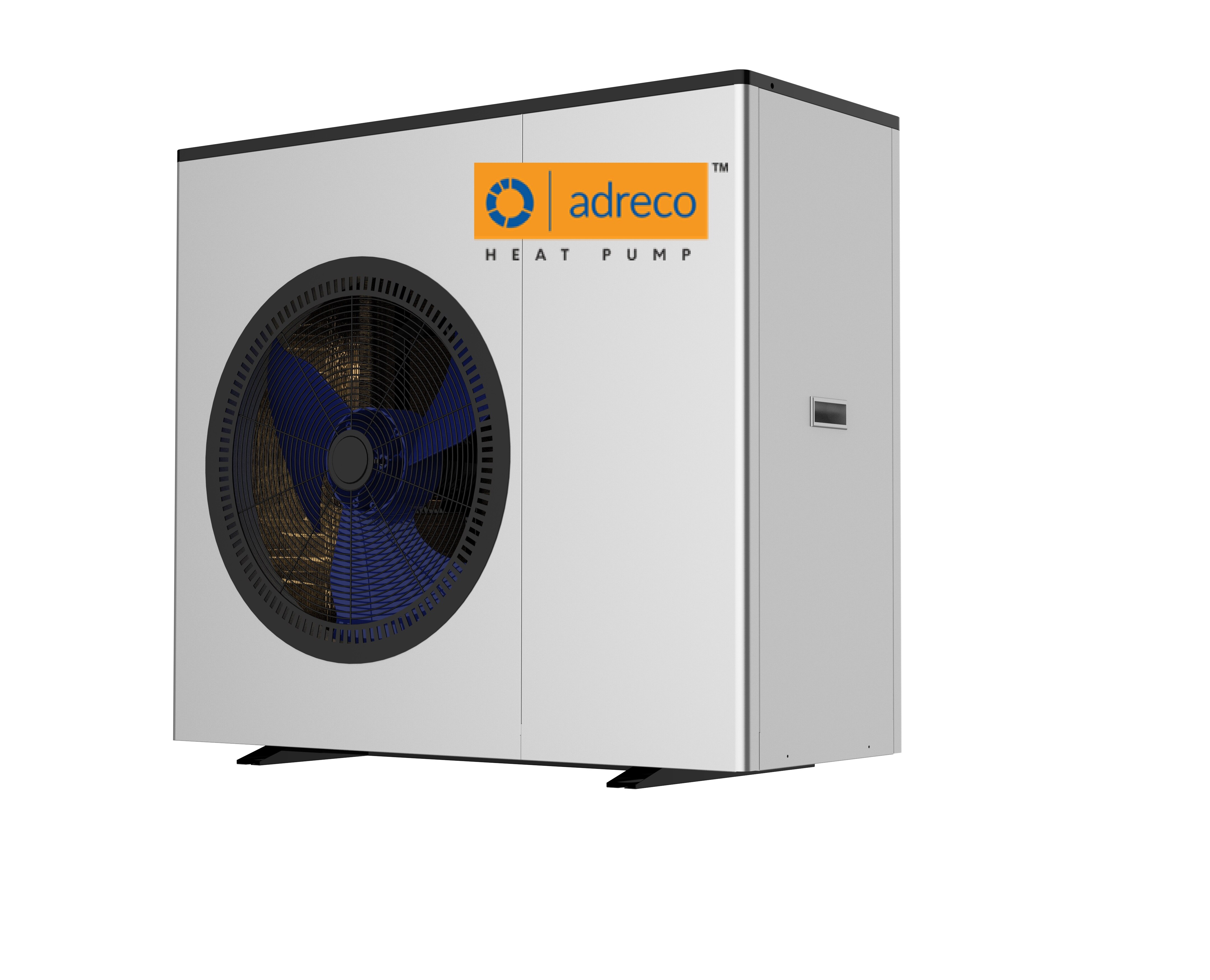 | Domestic Heat Pump ₹115000 Features: 1. Operating ambient temperature range up to -25° C to 45° C. 2. Hot water temperature upto 60° C. 3. View product → |
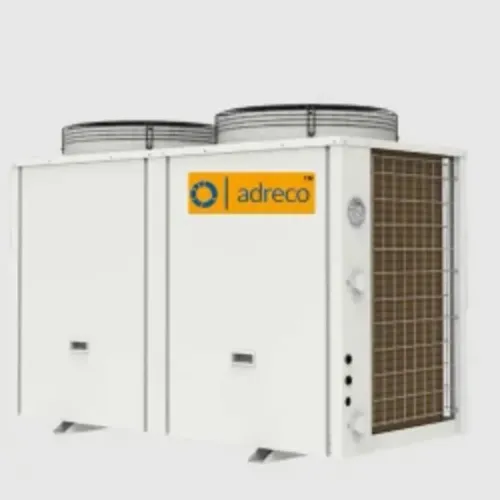
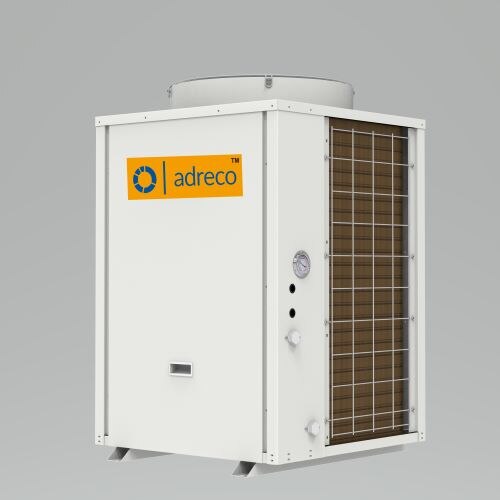 | Commercial Heat Pump ₹175000 Features: 1. Operating ambient temperature range upto -7 degree C to 43° C. 2. Hot water temperature upto 60° C. 3. View product → |
Frequently asked questions
How does an air-source heat pump move heat indoors?
The outdoor evaporator absorbs heat from air into the refrigerant. A compressor raises the refrigerant’s pressure and temperature, and the condenser transfers heat to the building system.
What do COP and SCOP tell you about efficiency?
COP shows the heat output divided by electrical input at a specific test condition. SCOP estimates seasonal performance across changing outdoor temperatures and operating conditions.
Which emitters work best with an air-source heat pump?
Underfloor heating and correctly sized low-temperature radiators suit heat pumps because they deliver heat at lower flow temperatures. Small high-temperature radiators can reduce efficiency.
Can one heat pump provide hot water and swimming-pool heating?
Yes, with suitable controls, heat exchangers, storage, and separate circuits. Domestic hot water and pool heating need different temperature targets and operating schedules.
What should you check before commissioning a heat-pump system?
Check the heat-loss calculation, emitter sizing, flow temperature, pipework, electrical supply, condensate drainage, controls, refrigerant installation, and commissioning records.
Related products
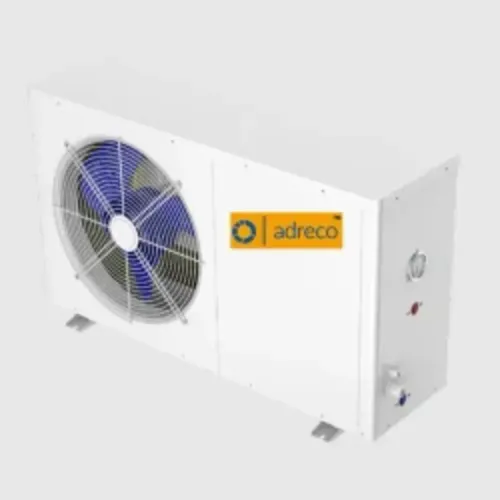
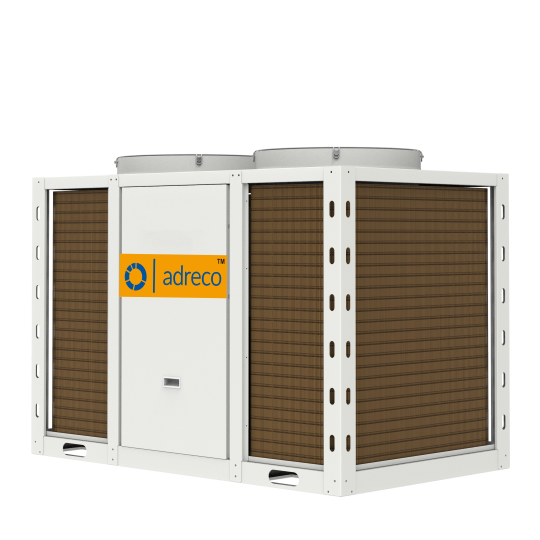 | Swimming Pool Heat Pump ₹75000 Pool Heat Pump Features: 1. Operating ambient temperature range up to -15° C to 45° C. 2. Hot water temperature upto 40° C. 3. View product → |
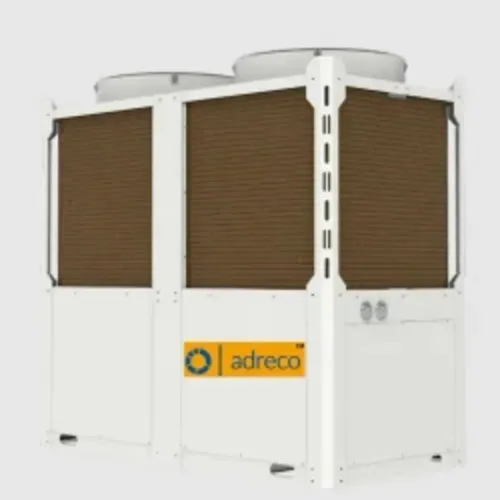
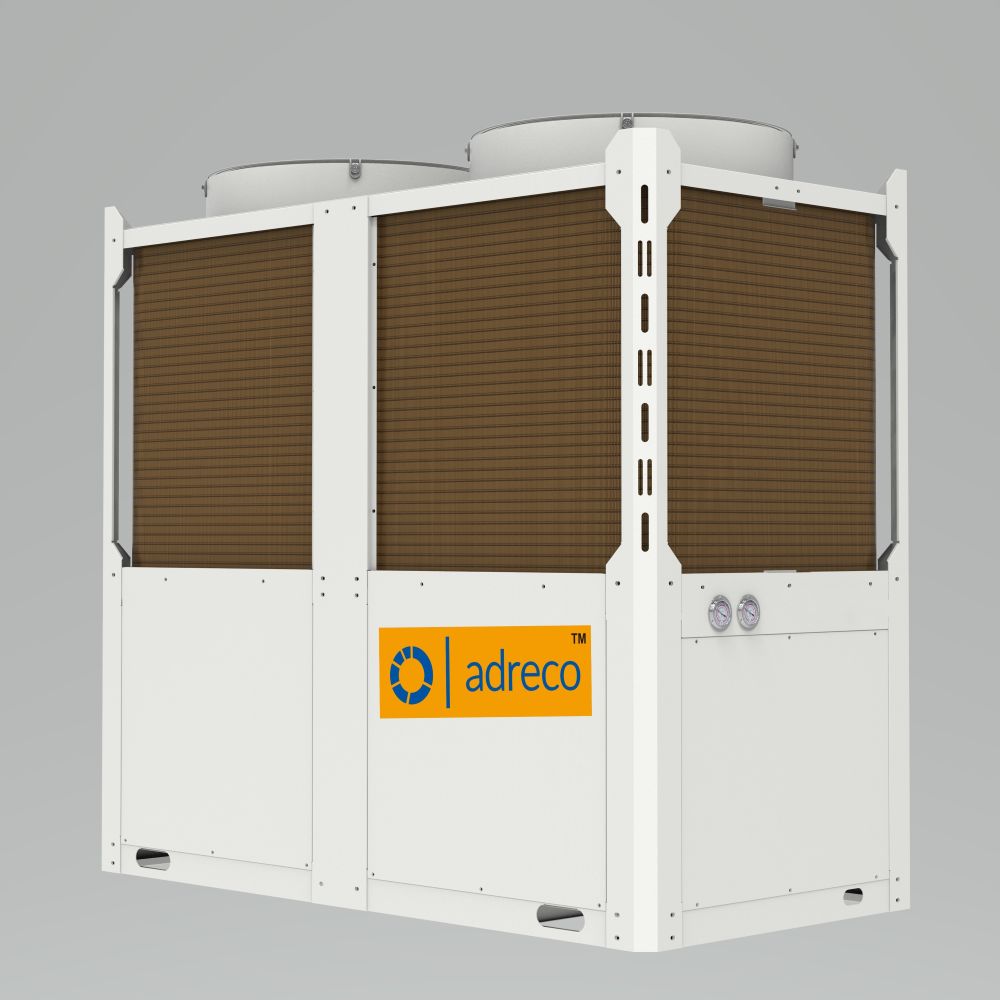 | Heat Pump Central Heating System Heat Pump Central Heating System ₹200000 Features: 1. Operating ambient temperature range up to -30° C to 43° C. 2. Hot water temperature upto 60° C. 3. View product → |
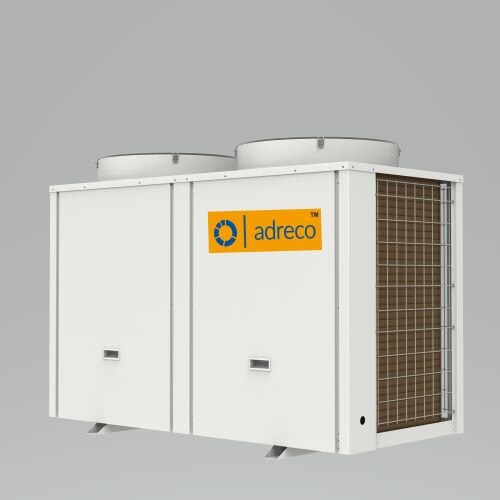 | EVI Heat Pump ₹195000 features: 1. Operating ambient temperature range up to -30° C to 43° C. 2. Hot water temperature upto 60° C. 3. View product → |