


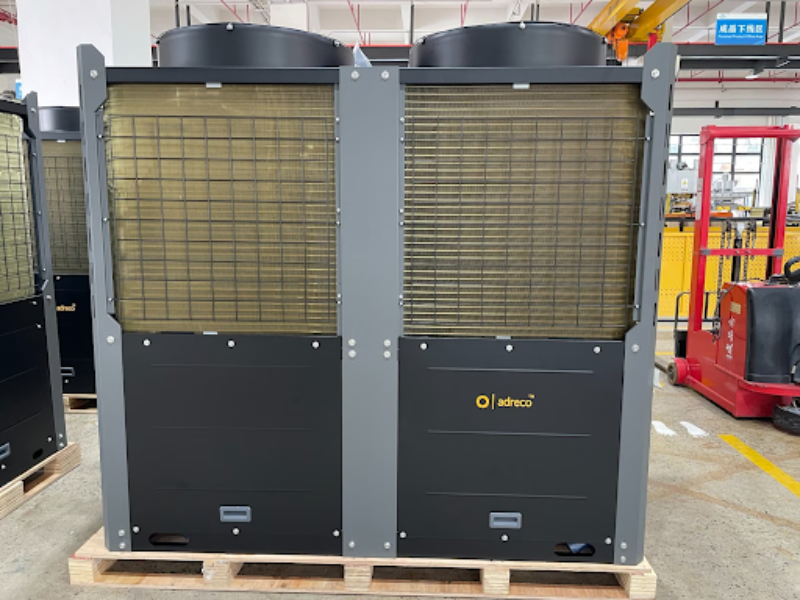
Heating technology has evolved significantly over the past decade, with businesses and property developers increasingly looking for systems that deliver reliable performance while reducing energy consumption. Among the many innovations available today, the Air Source Heat Pump has emerged as one of the most practical and energy-efficient solutions for residential, commercial, and industrial applications.
Unlike conventional heating systems that rely on fuel combustion or electric resistance, an air source heat pump captures heat from the outside air and transfers it indoors. This approach allows buildings to maintain comfortable temperatures while using considerably less energy. As sustainability and operating efficiency become priorities across Chandigarh and neighbouring states, understanding how this technology works can help project owners make better long-term decisions.
What Is an Air Source Heat Pump?
An Air Source Heat Pump is a heating system that extracts naturally available heat from outdoor air and transfers it to water or air inside a building. Even when temperatures are relatively low, the outside air contains usable thermal energy that modern heat pumps can efficiently harness.
The system uses a refrigeration cycle involving an evaporator, compressor, condenser, and expansion valve to collect, compress, and transfer heat where it is needed. Because it moves heat instead of generating it through combustion, the system consumes significantly less energy compared to many traditional heating methods.
This makes it a suitable option for projects aiming to improve energy efficiency while reducing operating costs.
How Does an Air Source Heat Pump Work?
Although the process involves advanced engineering, the operating principle is easy to understand.
The system works by:
- Drawing outdoor air across the evaporator.
- Absorbing heat into the refrigerant.
- Compressing the refrigerant to increase its temperature.
- Transferring the heat to the building's heating system or hot water circuit.
- Repeating the cycle continuously to maintain the desired temperature.
Modern air source heat pumps are designed to perform efficiently even during colder weather, making them suitable for many regions across North India.
Where Are Air Source Heat Pumps Used?
One of the biggest reasons for the growing popularity of air source heat pumps is their versatility. They can be integrated into a wide range of projects with different heating requirements.
Common applications include:
- Hotels and resorts
- Hospitals and healthcare facilities
- Residential apartments
- Independent villas
- Educational institutions
- Office buildings
- Manufacturing units
- Warehouses
- Institutional campuses
The ability to support both space heating and hot water requirements makes these systems an attractive option for many sectors.
Key Benefits of an Air Source Heat Pump
An air source heat pump offers several practical advantages that extend beyond energy savings.
Some of the notable benefits include:
- Lower electricity consumption
- Reduced dependence on conventional fuels
- Consistent heating performance
- Lower carbon emissions
- Quiet operation
- Long service life with regular maintenance
- Compatibility with modern heating systems
These advantages make heat pumps an investment that supports both operational efficiency and environmental responsibility.
Is It Suitable for the Climate in Chandigarh?
Many people assume that heat pumps only perform well in mild climates. However, modern air source heat pumps are engineered to operate efficiently across a wide range of outdoor temperatures.
For cities like Chandigarh, where winters are cool but not extreme, these systems can provide dependable heating for hotels, hospitals, educational institutions, commercial buildings, and residential projects. Proper equipment selection and professional installation play an important role in ensuring reliable year-round performance.
Factors to Consider Before Choosing an Air Source Heat Pump
Every building has unique heating requirements, so selecting the right system requires careful planning.
Some important factors include:
- Building size
- Heating load calculations
- Insulation quality
- Daily occupancy
- Hot water demand
- Existing heating infrastructure
- Energy efficiency goals
- Future expansion plans
A detailed assessment helps ensure that the selected system delivers optimal performance while avoiding unnecessary operating costs.
Why Proper Engineering Makes a Difference
Even the most advanced heating technology depends on thoughtful system design. Equipment capacity, hydraulic balancing, control strategies, and installation quality all influence efficiency and reliability.
For commercial, industrial, hospitality, and institutional projects in Chandigarh and nearby regions, many consultants and developers work with experienced manufacturers during the planning phase. Adreco Engineering Pvt Ltd provides engineered heating solutions designed to meet project-specific requirements while supporting energy-efficient building operations. The technical resources available through adreco.in also help architects, MEP consultants, and facility managers understand the different heat pump solutions available for modern infrastructure.
As organisations continue to prioritise sustainability and operational efficiency, an Air Source Heat Pump stands out as a practical heating solution that combines dependable performance with lower energy consumption. Understanding how the technology works and evaluating it during the design stage can help building owners invest in a heating system that delivers value well into the future.


