


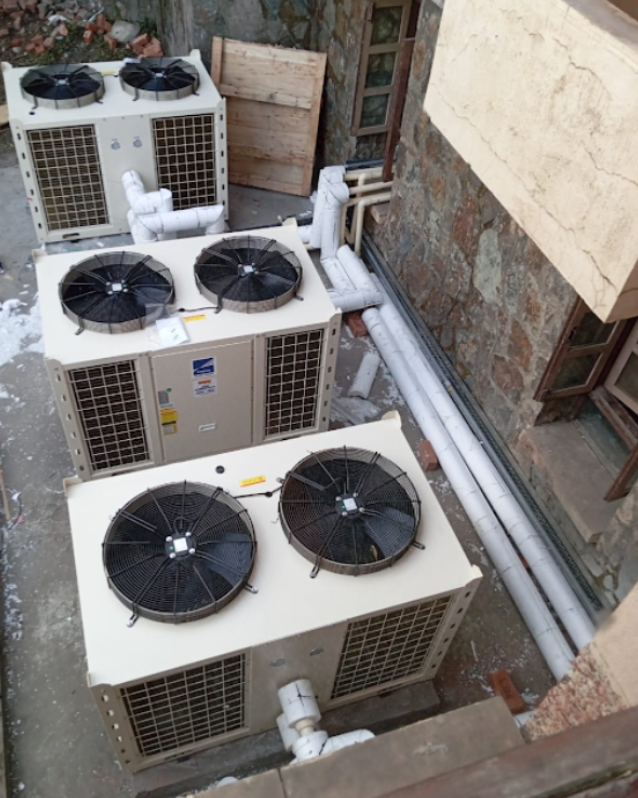
Many industrial heat pump applications operate effectively at moderate temperatures, but certain manufacturing processes require hotter water or higher thermal output. A High Temperature Heat Pump is engineered for applications where conventional low-temperature heat pump systems may not meet process requirements.
The technology can be valuable, but only when selected around actual temperature lift and process demand.
Understand the Required Temperature First
Industrial buyers should establish the required supply temperature before selecting equipment.
High-temperature heat pumps may be considered for applications such as:
- Industrial hot-water generation
- Cleaning and washing processes
- Selected food processing operations
- Process preheating
- Drying
- Commercial laundry
- Certain manufacturing processes
Not every application needs the maximum available temperature. Specifying a higher temperature than necessary can reduce efficiency.
Temperature Lift Influences Efficiency
Heat pumps move thermal energy from a lower-temperature source to a higher-temperature destination.
The difference between these temperatures is known as temperature lift.
Generally, a larger temperature lift requires more compressor work. Consequently, a system producing very hot water from cold outdoor air faces a more demanding operating condition than one raising moderately warm source water to a modest output temperature.
This relationship should be considered when evaluating efficiency expectations.
Identify the Available Heat Source
High-temperature applications do not always need to rely exclusively on outdoor air.
Some industrial facilities have recoverable low-grade heat from processes, cooling systems, exhaust streams or warm wastewater.
Where technically feasible, using a warmer source can reduce the temperature lift required from the heat pump.
This is particularly relevant for manufacturing plants where heat is simultaneously rejected in one part of the operation and required elsewhere.
Calculate Operating Hours
A high-efficiency system used for only a few hours each month presents a different financial case from equipment supporting a continuous production process.
Procurement managers should estimate:
- Annual operating hours
- Current fuel or electricity consumption
- Required thermal output
- Seasonal load variation
- Expected production changes
- Existing equipment efficiency
These factors provide a more meaningful basis for evaluating operating costs.
Consider Integration Requirements
Industrial heat pumps rarely operate in isolation.
Buffer tanks, pumps, heat exchangers, control valves and process interfaces need to be correctly designed.
Existing boilers may sometimes remain as backup or peak-load equipment, creating a hybrid system rather than requiring immediate complete replacement.
For industries in Chandigarh and surrounding manufacturing areas, Adreco Engineering Pvt Ltd can evaluate heat pump applications within the wider thermal requirements of a facility.
Focus on Useful Heat Rather Than Maximum Temperature
The objective should be to deliver the temperature the process genuinely needs at an acceptable energy cost.
Selecting equipment purely because it can achieve a high maximum outlet temperature can result in unnecessary capital and operating expenditure.
A High Temperature Heat Pump makes the strongest technical case when process temperatures, operating hours and available heat sources align with the capabilities of the system. Careful thermal assessment allows manufacturers to identify where the technology can contribute meaningfully to industrial energy efficiency.


