


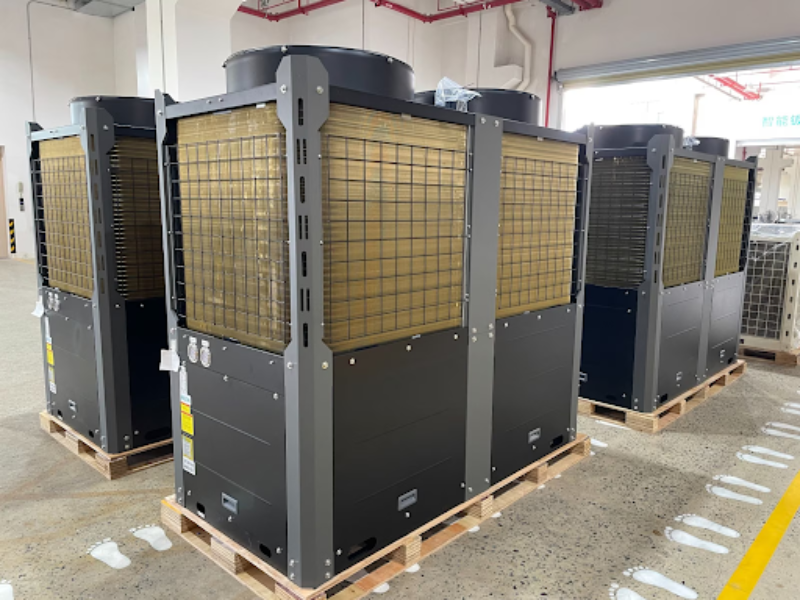
An Air Source Heat Pump can provide an efficient heating option for many commercial and industrial applications by extracting thermal energy from outdoor air. The technology is increasingly considered for space heating, hot-water production and selected process duties, but suitability varies significantly between projects.
Before selecting a provider or approving an installation, decision-makers should confirm that the site and heating requirements are compatible with the technology.
The Facility Has a Defined Heating Load
A project is ready for technical evaluation when the business can provide meaningful information about its heat demand.
Useful data includes:
- Current heating capacity
- Fuel or electricity consumption
- Required temperatures
- Operating hours
- Daily hot-water consumption
- Peak demand periods
- Seasonal changes
Without this information, equipment sizing becomes largely speculative.
Required Temperatures Match System Capabilities
Heat pumps are generally more efficient when operating with moderate temperature lifts.
Applications requiring significantly higher output temperatures need equipment specifically designed for those conditions.
A provider should therefore verify required supply and return temperatures before proposing a system.
Suitable Outdoor Installation Space Is Available
An air-source unit needs access to substantial quantities of ambient air.
The proposed location should provide adequate clearance, unrestricted airflow and maintenance access.
Noise, drainage from defrost cycles and proximity to occupied areas may also need consideration depending on the installation.
Electrical Infrastructure Has Been Reviewed
Although heat pumps transfer environmental heat, compressors, fans and pumps still require electricity.
Larger commercial installations can create meaningful electrical loads.
Available supply capacity, protection equipment and cable sizing should therefore be checked during project planning.
Existing Distribution Equipment Is Compatible
A new heat pump may need to connect with existing radiators, fan coils, process heat exchangers or hot-water systems.
Compatibility should be confirmed rather than assumed.
In some cases, modifying distribution equipment can allow the system to operate at lower water temperatures and improve overall efficiency.
The Provider Can Explain Performance at Real Conditions
A credible technical proposal should state the assumptions used to estimate performance.
Buyers should ask about:
- Heating output at design ambient temperature
- Expected outlet temperature
- COP under relevant conditions
- Part-load behaviour
- Defrost operation
- Control strategy
- Backup requirements
- Maintenance access
These details make proposals easier to evaluate on comparable terms.
Engineering Support Is Available
Industrial heating projects often require coordination between equipment, piping, electrical systems, controls and existing plant infrastructure.
Adreco Engineering Pvt Ltd works with industrial engineering requirements and can assess heat pump applications according to site-specific operating conditions.
For manufacturing facilities, EPC contractors and commercial projects in Chandigarh, an Air Source Heat Pump becomes a realistic option when heat demand, temperature requirements, installation conditions and electrical infrastructure have been properly defined.
Provider selection should therefore focus on technical assessment as much as equipment supply. A system designed around actual site conditions is more likely to deliver dependable heating performance, manageable operating costs and effective integration with the wider facility.


