


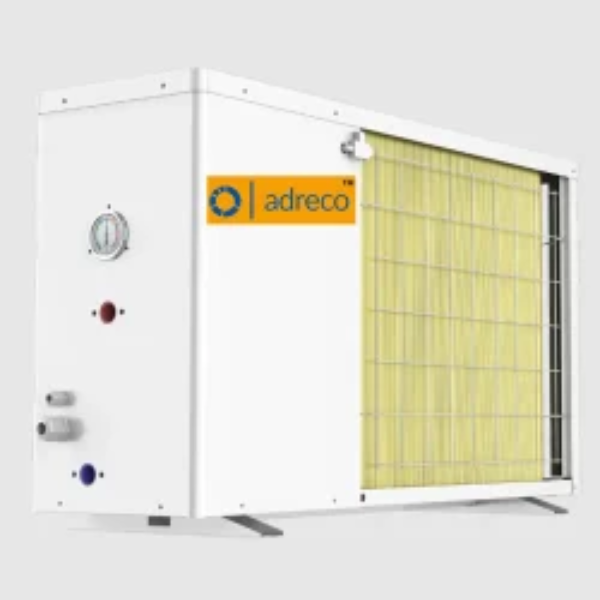
Choosing Heat Pump Heaters for a factory, hotel, institution or commercial property requires more than matching a catalogue capacity to estimated demand. The equipment must operate efficiently at the temperatures, loads and ambient conditions expected at the actual site.
A structured procurement process can reduce the risk of selecting an unsuitable system.
Establish the Heating Application
First determine exactly where the heat will be used.
Typical requirements include:
- Building heating
- Hot-water generation
- Washing
- Industrial preheating
- Drying
- Pool heating
- Hospitality applications
Each application has a different temperature profile and operating schedule.
Calculate Peak and Typical Loads
Peak capacity determines whether the system can satisfy maximum demand, while typical load influences everyday efficiency.
Both figures matter.
A facility may require 100% capacity only during a relatively small number of operating hours. In such cases, inverter-driven equipment or staged systems may provide more flexible operation than one large fixed-output unit.
Review Temperature Requirements
Ask suppliers to provide performance information at the temperatures relevant to your application.
Important parameters include source temperature, required water temperature, heating capacity and COP.
Avoid evaluating different systems using ratings measured under different test conditions.
Examine Equipment Construction
Commercial and industrial users should consider component quality and suitability for the installation environment.
Relevant areas include:
- Compressor technology
- Heat exchanger construction
- Refrigerant system
- Electrical protection
- Controller functionality
- Cabinet construction
- Water-side components
- Service accessibility
Equipment located in demanding industrial environments may require additional consideration for dust, corrosion or other site conditions.
Assess Controls
Controls can have a substantial influence on real-world energy use.
Useful functions may include scheduling, weather-based adjustment, staged operation, temperature monitoring and integration with other plant systems.
The required control complexity depends on the facility.
Ask About System Integration
The provider should evaluate pumps, buffer tanks, piping and distribution equipment rather than treating the heat pump as an independent machine.
Where existing boilers are retained, the control strategy should define when each heating source operates.
Look for Application-Specific Engineering
Industrial procurement teams should expect a provider to request technical information before recommending equipment.
Adreco Engineering Pvt Ltd serves engineered industrial requirements, making application conditions an important part of system selection.
For projects in Chandigarh and the surrounding industrial region, buyers should provide accurate load, temperature and operating data during the assessment stage.
The right Heat Pump Heaters are those that meet the facility's real heating requirements efficiently across expected operating conditions. A specification based on thermal demand, temperature lift, seasonal performance and system integration provides a stronger foundation for procurement than equipment capacity alone.


