


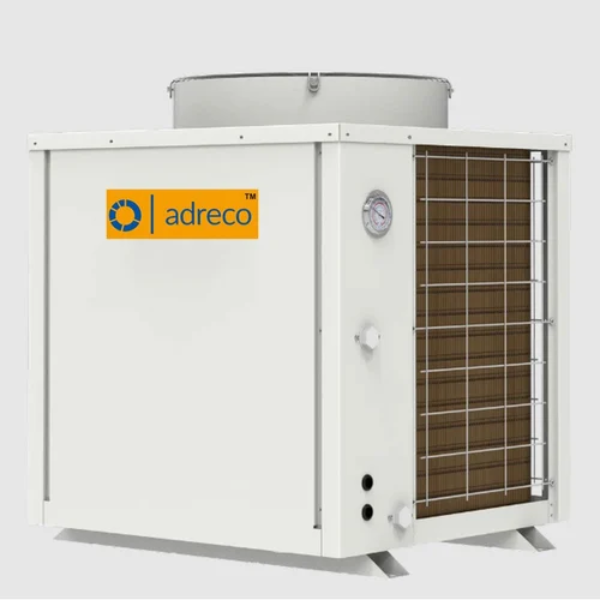
Hot water is an everyday necessity in hotels, hospitals, educational institutions, apartment complexes, manufacturing facilities, and residential buildings. While conventional water heating systems have served this purpose for years, they often consume significant amounts of electricity or fuel. As energy costs continue to rise, many building owners are turning to the Heat Pump Water Heater as a more efficient and sustainable alternative.
Unlike traditional water heaters that generate heat directly, a heat pump water heater transfers heat from the surrounding air to the water. This simple yet effective principle allows it to deliver reliable hot water while consuming considerably less energy. For commercial and institutional projects in Chandigarh and across Punjab and Haryana, understanding how this technology works can help decision-makers choose a heating solution that balances performance with long-term savings.
What Is a Heat Pump Water Heater?
A Heat Pump Water Heater is an energy-efficient system that uses ambient air as its primary heat source. Instead of relying entirely on electrical resistance or fuel combustion, it captures heat from the air and transfers it to water stored in a tank or circulated through a central hot water system.
Because the system moves heat rather than producing it from scratch, it requires much less electricity to deliver the same amount of hot water. This efficiency makes it suitable for applications where hot water demand is high and operational costs are a key concern.
How Does It Work?
The operating process involves a closed refrigeration cycle that continuously extracts and transfers heat.
The basic steps include:
- A fan draws surrounding air over the evaporator.
- The refrigerant absorbs heat from the air and changes into a gas.
- The compressor increases the refrigerant's temperature and pressure.
- The condenser transfers this heat to the water.
- The cooled refrigerant returns to repeat the cycle.
Although the process is highly technical, the outcome is straightforward—efficient hot water production with lower energy consumption.
Where Are Heat Pump Water Heaters Used?
One of the biggest advantages of this technology is its wide range of applications.
It is commonly installed in:
- Hotels and resorts
- Hospitals and healthcare centres
- Schools and colleges
- Residential apartments
- Villas and housing societies
- Industrial facilities
- Commercial office buildings
- Sports complexes
- Student hostels
Any building that requires a steady supply of hot water throughout the day can benefit from an energy-efficient heating solution.
Benefits of Choosing a Heat Pump Water Heater
Compared to many conventional systems, heat pump water heaters offer several practical advantages.
Some of the key benefits include:
- Lower electricity consumption
- Reduced operating expenses
- Consistent hot water availability
- Environmentally responsible operation
- Reduced carbon footprint
- Long equipment life with proper maintenance
- Quiet and reliable performance
For businesses that operate throughout the year, these benefits can contribute to noticeable savings over the system's lifetime.
Is It Suitable for Commercial Projects?
Commercial buildings often have higher hot water requirements than residential properties. Hotels need hot water for guest rooms and kitchens, hospitals require it for hygiene and sanitation, while educational institutions and industrial facilities may have continuous daily demand.
A properly designed Heat Pump Water Heater can handle these requirements efficiently when sized according to the building's occupancy, usage patterns, and peak demand. Professional planning ensures that the system delivers adequate capacity without unnecessary energy consumption.
What Should You Consider Before Installation?
Selecting the right water heating system involves more than choosing a capacity.
Before making a decision, consider:
- Daily hot water demand
- Number of users
- Storage tank requirements
- Installation space
- Climate conditions
- Existing plumbing infrastructure
- Future expansion plans
- Maintenance accessibility
A detailed assessment helps ensure the system operates efficiently and meets the building's long-term requirements.
Why Professional System Design Matters
The efficiency of a heat pump water heating system depends on proper engineering, installation, and integration with the building's infrastructure. Factors such as pipe sizing, storage capacity, circulation design, and control systems all influence overall performance.
For projects in Chandigarh and surrounding regions, many architects, HVAC consultants, builders, and facility managers work with experienced solution providers during the planning stage. Adreco Engineering Pvt Ltd designs energy-efficient heating systems for commercial, industrial, hospitality, and institutional applications, helping project teams select solutions that align with operational and sustainability goals.
As organisations continue to prioritise energy efficiency and responsible resource management, a Heat Pump Water Heater offers a practical way to reduce energy consumption while ensuring a dependable supply of hot water. Understanding its working principle and evaluating project-specific requirements before installation can help building owners make an informed investment that delivers value for many years.


