


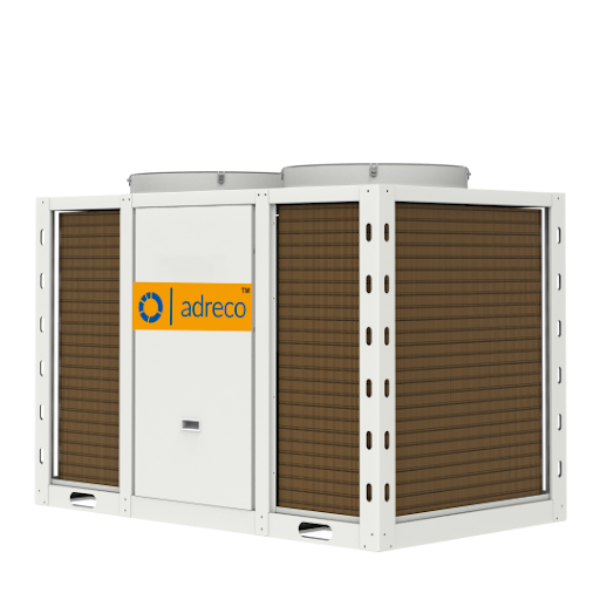
A swimming pool can be an important recreational feature for homes, hotels, resorts, clubs, wellness facilities, and commercial properties. However, changing outdoor temperatures can make pool water uncomfortable for swimming. A Swimming Pool Heat Pump provides a practical way to maintain more consistent water temperatures while using ambient heat from the surrounding air.
For property owners in Chandigarh and other parts of the region, seasonal temperature variations can significantly influence pool usability. Understanding how heat pump technology works can help owners plan pool heating more effectively.
How a Swimming Pool Heat Pump Works
A pool heat pump does not primarily create heat through direct electrical resistance. Instead, it absorbs heat from the surrounding air, increases its temperature through a refrigeration cycle, then transfers that energy to circulating pool water.
The basic process involves:
- Drawing ambient air across an evaporator
- Absorbing available heat from the air
- Compressing refrigerant to increase its temperature
- Transferring heat through a heat exchanger
- Returning warmed water to the swimming pool
Because much of the thermal energy is obtained from ambient air, heat pumps can provide an energy-conscious alternative to conventional heating methods in suitable applications.
Why Pool Temperature Changes Quickly
Pool water continuously exchanges heat with the surrounding environment. Several factors influence how quickly the water cools.
Outdoor temperature is an obvious factor, but wind speed, humidity, pool surface area, water volume, operating hours, shading, and nighttime conditions also matter. Evaporation can account for substantial heat loss from an uncovered pool.
This means selecting heating equipment only according to pool volume may not provide an accurate picture of the actual heating requirement.
Pool Covers Can Improve Heating Performance
One of the simplest ways to support a Swimming Pool Heat Pump is to reduce unnecessary heat loss.
A suitable pool cover can help limit evaporation when the pool is not being used. This allows retained thermal energy to remain in the water for longer and can reduce the heating load.
Hotels and resorts with scheduled swimming hours may particularly benefit from coordinating heating operation with pool-cover usage.
Correct Sizing Matters
An undersized unit may run for extended periods without achieving the desired temperature quickly enough. An unnecessarily oversized system may increase initial investment without delivering proportionate benefits.
Heat pump sizing should therefore consider factors such as:
- Pool dimensions and total water volume
- Indoor or outdoor installation
- Desired water temperature
- Typical ambient temperature
- Expected operating season
- Pool usage pattern
- Heat loss conditions
- Availability of a pool cover
Professional heat-load assessment is especially useful for larger hospitality and commercial pools.
Chandigarh Conditions Require Seasonal Planning
Chandigarh experiences considerable temperature differences across the year. Pool owners who want to extend swimming beyond the naturally warm months should therefore think beyond peak summer conditions.
A system should be selected according to the temperatures at which heating will actually be required. Equipment performance can change with ambient conditions, so published capacity should be interpreted alongside the specified operating environment.
Routine Maintenance Supports Reliable Operation
Heat pumps need adequate airflow to extract energy efficiently. Leaves, dust, debris, restricted ventilation, and poorly maintained filters can affect system performance.
Owners should periodically inspect the installation area, maintain proper pool-water circulation, clean relevant components, and follow the manufacturer's maintenance recommendations.
Water chemistry also deserves attention because pool equipment operates continuously in contact with treated water.
Planning Pool Heating as a Complete System
Effective pool heating involves more than purchasing a heating unit. Circulation pumps, filtration, pipe sizing, controls, insulation, pool covers, operating schedules, and heating equipment should work together.
Adreco Engineering Pvt Ltd manufactures HVAC and heat pump solutions for residential, hospitality, commercial, and other applications. For a pool project, the technical discussion should begin with operating conditions and actual heating demand rather than equipment capacity alone.
A correctly planned Swimming Pool Heat Pump can help extend usable swimming periods while keeping energy consumption, operating schedules, and water-temperature expectations in balance.


