


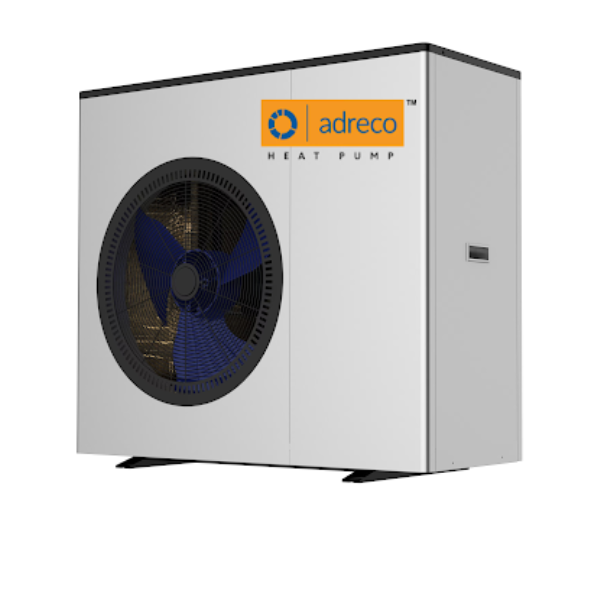
Growing interest in efficient heating has made Domestic Heat Pumps an increasingly considered option for residential properties. These systems can support space heating, hot-water production or both, depending on their configuration.
For homeowners and residential developers, choosing the right system requires more than comparing equipment capacities.
Start With the Actual Heating Requirement
The first step is understanding what the heat pump needs to accomplish.
A home may require equipment primarily for domestic hot water, while another property may need central space heating as well.
The required capacity depends on factors including:
- Property size
- Insulation quality
- Number of occupants
- Hot-water consumption
- Desired indoor temperature
- Existing heating system
- Local winter conditions
Two homes with similar floor areas can have significantly different heating loads.
Check the Required Water Temperature
Heat pumps generally perform more efficiently when they do not need to produce unnecessarily high water temperatures.
This makes the heating distribution system important.
Underfloor heating and appropriately designed low-temperature emitters can work effectively with heat pumps. Existing radiator systems need to be evaluated according to their required flow temperatures and heat output.
For domestic hot-water applications, storage capacity and temperature requirements should also be considered.
Look Beyond Rated Capacity
A model may have an attractive nominal heating capacity, but homeowners should check performance at realistic operating temperatures.
When evaluating Domestic Heat Pumps, useful specifications include:
- Heating output at different ambient temperatures
- COP under relevant conditions
- Maximum outlet-water temperature
- Noise levels
- Compressor type
- Operating temperature range
- Defrost controls
- Electrical requirements
Inverter-driven equipment can adjust compressor output according to demand, potentially improving part-load operation.
Consider Chandigarh's Seasonal Variation
A system installed in Chandigarh needs to operate through both relatively mild and colder periods.
Winter performance therefore deserves particular attention. Selecting equipment only according to favourable test conditions can produce unrealistic expectations about actual electricity consumption and heating capacity.
Correct system design accounts for the lower temperatures the property is likely to experience.
Avoid Oversizing Without Calculation
Choosing a larger unit as a precaution may seem sensible, but excessive capacity can create unnecessary cycling and higher initial costs.
Undersizing creates a different problem because the system may struggle to satisfy peak heating demand.
A proper heat-load calculation provides a better basis for equipment selection.
Consider the Complete Installation
Heat pump performance depends on the entire system.
Pipework, circulation pumps, storage tanks, insulation, controls and distribution equipment need to work together. Installation location should also provide sufficient airflow for an air-source unit.
Adreco Engineering Pvt Ltd works with engineered heating solutions where system configuration can be matched to actual operating requirements.
For homeowners, developers and residential projects considering Domestic Heat Pumps in Chandigarh, the most useful buying decision starts with heat demand rather than product size. Evaluating heating loads, water temperatures and seasonal conditions helps identify a system capable of providing reliable performance without unnecessary capacity.


