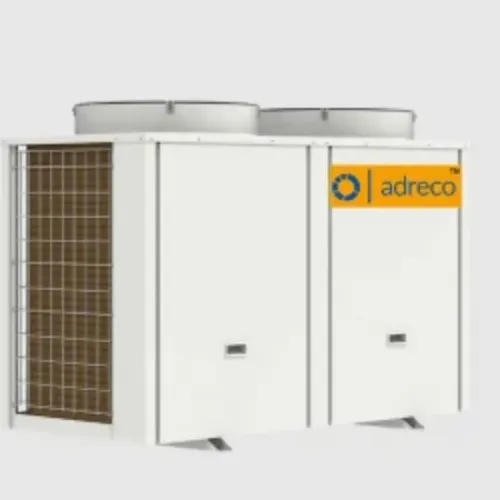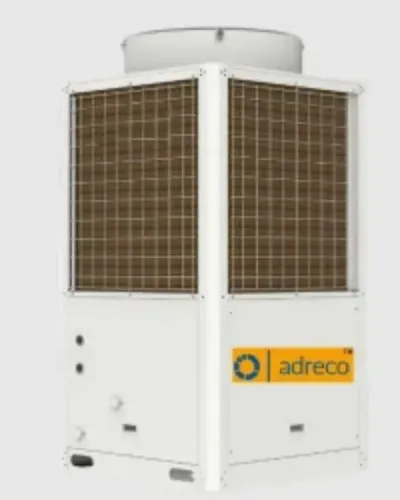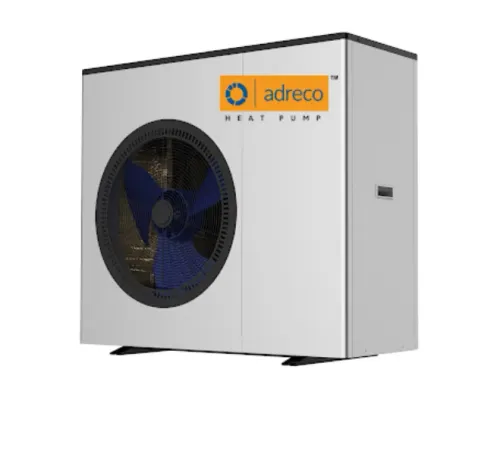


Heating demand rarely remains constant throughout an entire day. Hotel occupancy changes, domestic hot-water consumption rises during peak periods, weather conditions fluctuate, and building heating requirements vary with outdoor temperature. An Inverter Heat Pump is designed to respond to changing loads by adjusting compressor operation within its available modulation range.
For commercial properties, residential projects, and facilities in Chandigarh, this capability can be valuable, but inverter technology should still be evaluated carefully.
Understand What Inverter Control Changes
Traditional fixed-speed compressors generally operate at a set speed and cycle on and off as heating demand changes.
An inverter-driven compressor can vary its operating speed. When heating demand is lower, the system may reduce output rather than repeatedly operating at full capacity.
Potential benefits can include smoother temperature control, reduced cycling under suitable conditions, and improved part-load operation.
However, these benefits depend on equipment selection and system design.
Check the Modulation Range
The word inverter alone does not tell buyers how widely a heat pump can adjust capacity.
Ask for minimum and maximum heating output under relevant operating conditions. A system with a useful modulation range can adapt more effectively when load varies significantly.
This is especially relevant in hotels, apartment projects, and commercial buildings where demand may change throughout the day.
Compare Performance at Real Conditions
Catalogue headline values deserve context.
When comparing an Inverter Heat Pump, examine performance at different ambient temperatures and water outlet temperatures. Chandigarh's seasonal conditions mean a system may encounter warm, mild, and cold outdoor air during the year.
Important technical information includes:
- Heating capacity at relevant ambient temperatures
- Power input
- Water temperature range
- Minimum operating temperature
- Compressor modulation range
- Sound data
- Water-flow requirements
- Defrost strategy
- Control capabilities
Avoid Oversizing Based on Peak Demand Alone
Peak heating demand matters, but it should not be the only sizing criterion.
If the system is dramatically oversized, it may spend much of its operating life close to minimum output. Good engineering therefore considers both peak demand and typical part-load conditions.
Storage can also help manage short-duration demand peaks in hot-water applications.
Controls Need to Match the Application
Inverter technology is most useful when the controls understand what the system needs to achieve.
Temperature sensors, pumps, storage tanks, building-management interfaces, sequencing controls, and backup equipment may all influence operation.
In multi-unit projects, intelligent staging can also help distribute the load across available equipment.
Frequently Asked Questions
Does an inverter heat pump always consume less electricity?
Energy consumption depends on load, operating temperatures, equipment efficiency, controls, and installation. Inverter modulation can improve part-load operation, but project-specific analysis is necessary.
Is inverter technology useful for commercial hot water?
It can be, particularly where demand varies, provided the system and storage arrangement are designed appropriately.
Does inverter control eliminate compressor cycling?
Not necessarily. Cycling can still occur when demand falls below the minimum available capacity.
For Chandigarh projects with changing heating demand, inverter technology can provide useful operational flexibility. The stronger buying decision comes from comparing modulation range, seasonal operating data, controls, and actual load patterns instead of selecting equipment simply because it carries an inverter label.