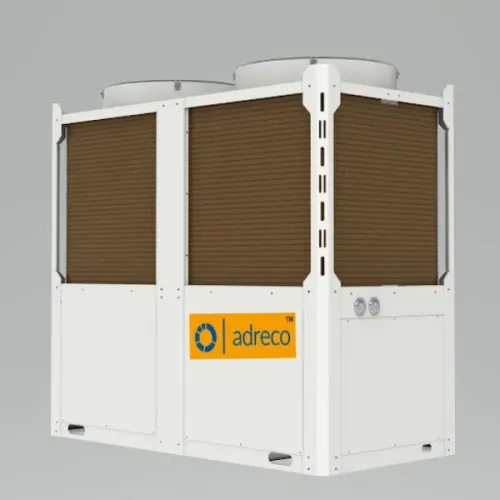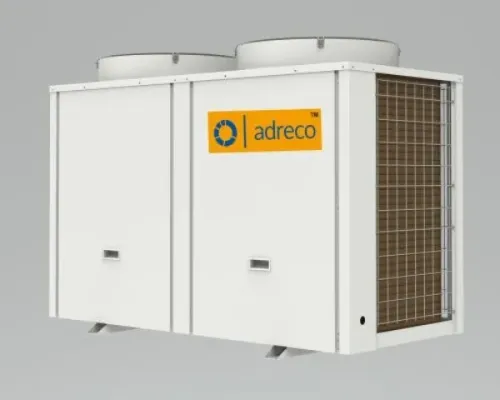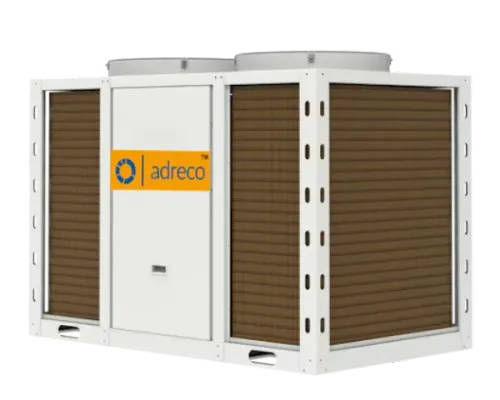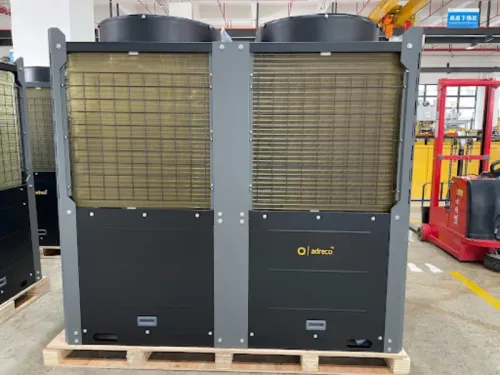


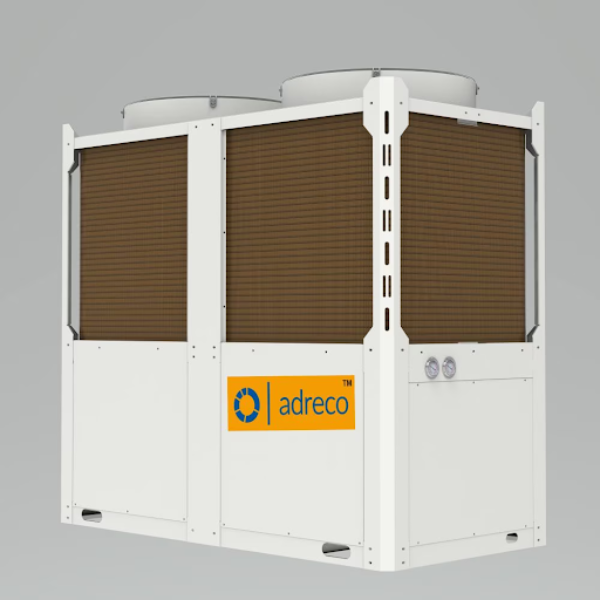
Industrial facilities need dependable heating for comfortable workspaces, controlled production environments, hot-water requirements, and other operational needs. A Heat Pump Central Heating System provides an energy-efficient way to meet many of these requirements by transferring available heat instead of relying entirely on direct electrical resistance heating or fuel combustion.
For industrial and commercial facilities in Chandigarh and surrounding regions of Punjab and Haryana, heat pump technology can be particularly relevant when businesses are looking to reduce conventional energy consumption while maintaining predictable heating performance.
How Central Heat Pump Heating Works
A heat pump absorbs thermal energy from a source such as outdoor air and raises its temperature through a refrigeration cycle. The recovered heat is then supplied to the building or process through water-based or air-based distribution systems.
A typical system includes:
- Compressor
- Evaporator
- Condenser
- Expansion device
- Refrigerant circuit
- Pumps and circulation components
- Temperature controls
- Heat distribution equipment
Instead of generating every unit of heat directly from electricity, the system uses electricity primarily to move and upgrade thermal energy.
Where Central Heating Systems Can Be Used
Heat pump central heating can serve a wide range of commercial and industrial environments. Common applications include administrative buildings within manufacturing plants, warehouses, institutional premises, hotels, commercial complexes and selected industrial processes.
Depending on the design, a central heat pump may supply heated water to radiators, fan coil units, underfloor heating arrangements or other compatible distribution systems.
The suitability of each application depends on required water temperature, ambient conditions, operating hours and existing infrastructure.
Why System Design Matters
Heat pump performance depends heavily on correct sizing. Installing a system based only on building area can result in inefficient operation because actual heat demand is influenced by several variables.
Engineers generally consider:
- Required indoor temperature
- Building insulation
- Heat loss through walls and roofs
- Operating schedule
- Outdoor temperature conditions
- Required water temperature
- Existing heating infrastructure
- Simultaneous hot-water demand
An industrial facility operating continuously may require a very different configuration from a commercial building used for limited hours.
Understanding Efficiency in Practical Terms
Heat pumps are commonly evaluated using coefficient of performance, or COP. A COP above 1 indicates that the useful heat supplied is greater than the electrical energy consumed by the heat pump itself.
Actual efficiency, however, varies with operating conditions.
As the temperature difference between the heat source and required output temperature increases, the heat pump generally has to work harder. This is why equipment selection should be based on expected real-world operating conditions rather than a single headline efficiency figure.
Integrating Heating With Existing Facilities
Existing plants do not always require complete replacement of their heating infrastructure. In some projects, heat pumps can be incorporated into existing hot-water circuits or used as part of a hybrid arrangement.
Adreco Engineering Pvt Ltd works in engineered industrial and environmental solutions, where equipment selection needs to account for operating conditions and broader plant requirements.
For facilities evaluating a central heating upgrade, a technical assessment can help determine whether heat pump technology is suitable for the required temperatures, operating pattern and available infrastructure.
A well-designed Heat Pump Central Heating System is ultimately about matching heat demand with appropriate equipment. When load calculations, distribution design and operating conditions are considered together, heat pumps can provide a practical route towards more efficient industrial and commercial heating.