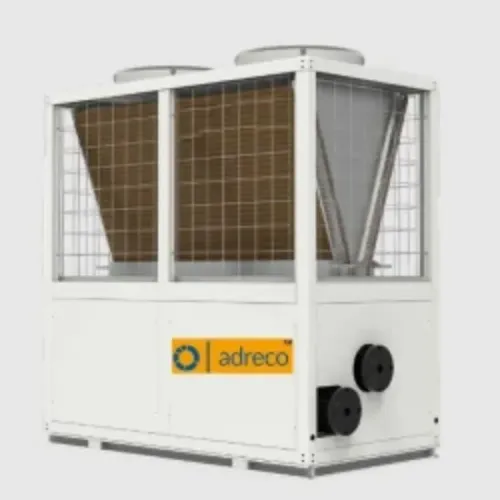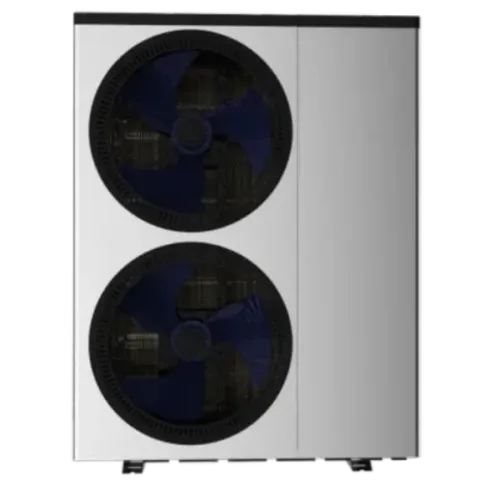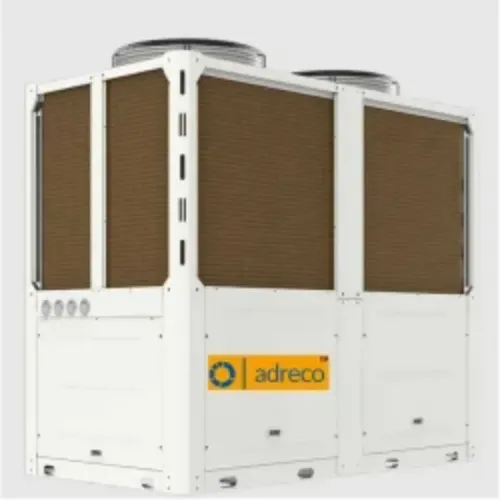


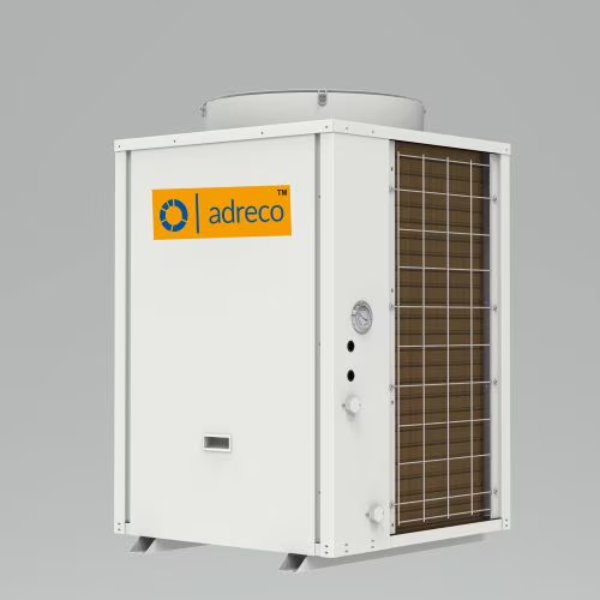
Hotels, hospitals, commercial buildings, manufacturing facilities, and institutional projects often require substantial quantities of hot water throughout the day. When heating demand is continuous, the efficiency of the equipment becomes an important operational consideration. A Commercial Heat Pump is designed to meet larger heating requirements by transferring available heat from the surrounding environment instead of relying entirely on direct electrical resistance heating.
For businesses and project developers in Chandigarh and across the region, understanding how this technology works can help during early-stage HVAC planning.
How Commercial Heat Pump Technology Works
A heat pump absorbs heat from a suitable source, commonly ambient air, and transfers it to water through a refrigeration cycle. Electricity powers the compressor and associated components, but much of the usable heat is transferred rather than generated directly.
This operating principle makes commercial heat pump systems relevant to facilities with recurring hot-water demand.
Typical applications include:
- Hotels and resorts
- Hospitals and healthcare facilities
- Hostels and institutional buildings
- Apartment developments
- Commercial kitchens
- Industrial facilities
- Sports centres
- Wellness properties
The actual system configuration depends on water temperature requirements, daily consumption, ambient conditions, storage capacity, peak demand, and the way hot water is distributed throughout the property.
Why System Sizing Matters
A larger-capacity machine is not automatically a better solution.
Oversizing can increase initial investment and may create inefficient operating patterns. Undersizing can leave the system struggling during periods of high demand. Proper selection therefore begins with understanding the facility rather than simply choosing equipment based on a nominal capacity.
Engineers generally need to consider daily hot-water consumption, required outlet temperature, peak usage periods, recovery time, storage tank capacity, operating hours, climate conditions, and available electrical infrastructure.
For example, a hotel with concentrated morning demand may need a different arrangement from an industrial facility where process hot water is consumed steadily across several shifts.
Storage Can Be Part of the Efficiency Strategy
Heat pump performance should not be viewed only in terms of the heating unit.
A properly designed storage system can allow hot water to be generated during favourable operating periods and made available when demand increases. Tank insulation, circulation design, piping losses, control logic, and backup arrangements can therefore influence the overall performance of the installation.
This is particularly relevant for commercial properties where hot-water availability must remain consistent even when demand changes throughout the day.
What About Chandigarh Climate Conditions
Seasonal temperature changes influence air-source heat pump performance. Equipment intended for commercial applications should therefore be selected with actual operating conditions in mind rather than only nominal catalogue ratings.
Businesses in Chandigarh may experience different heating loads across summer, monsoon, and winter periods. Designers should assess how the selected system performs when ambient temperature drops and heating demand rises.
Frequently Asked Questions
Can a commercial heat pump provide hot water throughout the year?
A correctly selected system can support year-round applications, although capacity and efficiency vary with operating conditions.
Can it replace conventional water heating completely?
That depends on the project. Some facilities use heat pumps as the primary heating source, while others incorporate backup heating based on operational requirements.
Is the same system suitable for every commercial building?
No. Hotels, hospitals, residential developments, and industrial facilities can have very different load profiles.
A well-planned Commercial Heat Pump project begins with load assessment, temperature requirements, operating conditions, and system integration. Understanding these fundamentals gives facility owners and project teams a stronger foundation for selecting an efficient heating solution.